Types of disability assist dogs
Learn about the different types of disability assist dogs and the jobs they do.
On this page
Guide dogs
Guide dogs are specially trained to support people who are blind, deafblind, or have low vision. They help their handler move around and travel safely, as well as find key locations and objects.
Hearing dogs
Like the same suggests, these dogs assist people who are deaf or hard of hearing. They are trained to recognise sounds and alert their handler by placing their paw on them and leading them to where they need to go. Hearing dogs are trained to recognise sounds like smoke alarms, alarm clocks, door knocks/bells, text message tones, and even crying babies.
Seizure alert dogs
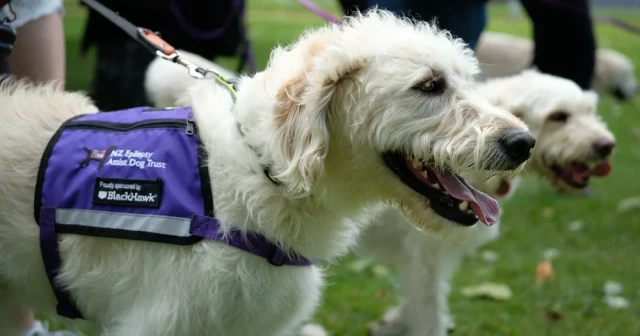
Also called epilepsy assistance dogs or seizure response dogs, these clever canines can be trained to support a person before, during, and after a seizure. Actions they can be trained to do include:
placing their body to break their handler’s fall at the start of a seizure
lying next to their handler during a seizure to prevent an injury and provide support and comfort
getting help or activating an alert device.
Some seizure alert dogs can also learn to detect when their owner is about to have a seizure.
Diabetic alert dogs
Diabetic alert dogs are trained to sense when a person’s blood sugar levels are too low or high. They do this by using their incredible sense of smell to sniff out chemicals that the human body releases when blood sugar is low or high. These chemicals are released through a person’s breath, sweat, saliva, and skins oils.
Allergy detection dogs
Allergy detection dogs can smell things their handler is allergic to in the environment and let them know about it.
Mobility assistance dogs
Mobility assistance dogs are trained to help people with mobility challenges to do a range of everyday tasks. They can be trained to assist with things like:
fetching items
opening and closing doors and draws
turning on lights
pushing buttons for elevators and pedestrian crossings
getting dressed.
Assistance dogs for people with autism or intellectual disabilities
Disability assist dogs can be trained to help people with autism or intellectual disabilities manage daily challenges, stay safe, and build confidence and independence.
For handlers with autism, a gentle nudge, paw, or cuddle from their assist dog can help them regulate their emotions in situations that are stressful or overload their senses.
These assist dogs can also be helpful for children with autism or an intellectual disability who have a tendency you run away or wander off. A dog can be trained to stop a kid from walking into a hazards or tethered to the child to prevent them from wandering.