Disability assist dogs
Learn about our furry friends who support people with a range of disabilities.
Disability assist dogs are specially trained and certified to assist disabled people or people with medical conditions in their daily lives. They’re sometimes called assistance dogs, mobility dogs, or service dogs.
There are different types of disability assist dogs that do different jobs depending on their training and their handler’s needs. Aside from their core skills, disability assist dogs can help build their handler’s self-confidence, give them independence, and provide companionship.
People who use certified disability assist dogs are allowed to bring them into public spaces and on public transport. Disability assist dogs need to pass an annual Public Access Test (PAT) to make sure they are well-behaved in public.
A quick note – we use the word ‘handler’ to describe a disabled person who is a supported by a disability assist dog. You might use another word like owner or companion, but we use handler just because that’s the word used by disability assist dog organisations.
In this section
-
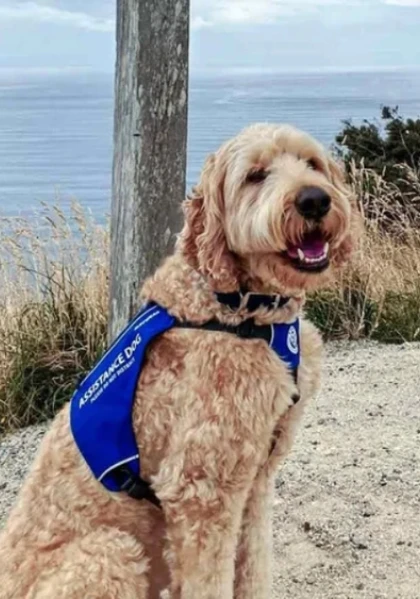
Types of disability assist dogs
Learn about the different types of disability assist dogs and the jobs they do.
-
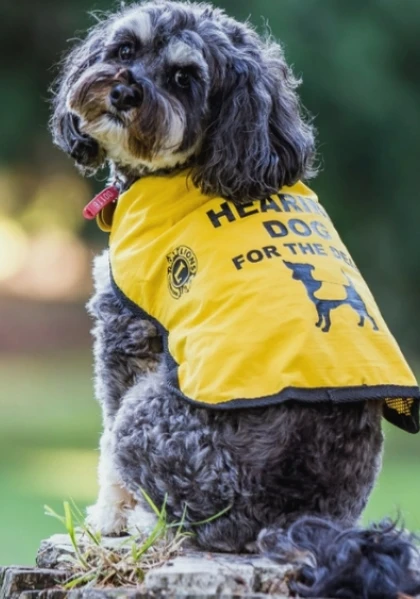
Disability assist dog organisations
Discover organisations that train and certify disability assist dogs.
-
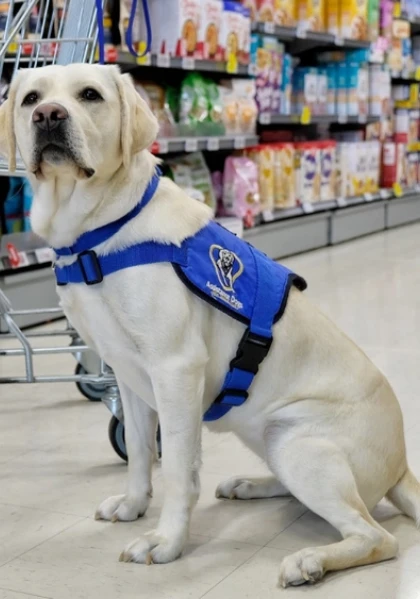
Access rights
Find out about the public access rights of disability assist dogs.
Let the dog do their job
A lot of us love dogs and want to give them all the pats and cuddles, but it’s important to remember that disability assist dogs have a job to do.
When you see an assist dog out in public, they’re working to make sure their handler can safely go about the day. Even if the dog is lying down or seems to be relaxing, it’s still working.
Therefore, there are some rules you should follow:
don’t pat or touch the dog
don’t talk to the dog or make sounds at it
don’t feed the dog
don’t distract the dog in any way
Everyone is different, so some handlers might be happy for you to pat their dogs if you ask first. However, please respect their choice if they say no.