Access rights
Find out about the public access rights of disability assist dogs.
On this page
Access to public places and private businesses
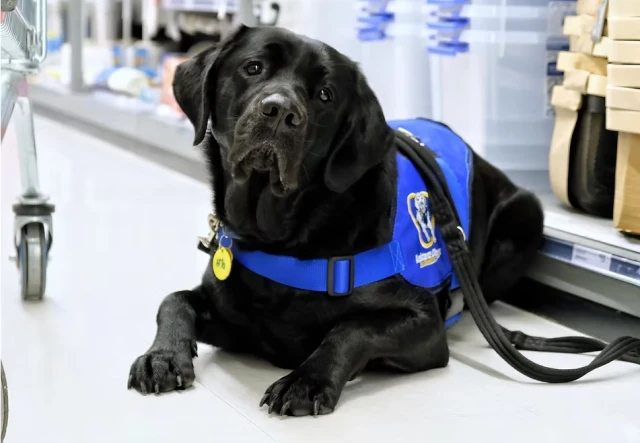
Under New Zealand law, certified disability assist dogs have the right to be in any public place or private business. This includes places like supermarkets, health facilities, shops, malls, motels or hotels, movie theatres, and restaurants to name a few. You may need to ask permission before taking your disability assist dog into a marae or church.
Disability assist dogs are also allowed to travel on all public transport, including buses, taxis, and rideshare services like Uber.
People operating business and other spaces are allowed to set reasonable conditions that handlers and their dogs need to follow, e.g. asking that the dog stays on a lead. However, these conditions mustn’t discriminate against the disabled person.
Disability assist dogs must be certified by a government-approved organisation to have public access rights.
Read more about organisations that certify disability assist dogs.
If you’re ever refused access due to your disability assist dog, you can make a complained to Te Kāhui Tika Tangata Human Rights Commission.
Read more about the laws on the Human Rights Commission website
Sprintlaw has a great article that explains the laws around disability assist dogs and advice for businesses. It’s very helpful if you’re a business owner and not sure about what you should and shouldn’t do.
Read Sprintlaw’s article about assist dog laws
National Service Dog ID Card
In August 2026 the Government launched the National Service Dog ID Card, which disability assist dog handlers can use as proof that their dog has legal access rights.
This is a nationally consistent photo ID card issued by disability assist dogs organisations. This means that assist dogs have the same kind of card no matter where they were certified.
The card clearly states that refusing the dog access is against the law and includes a QR code linking to further information about disability assist dog access rights.
Handlers don’t need to the have the National Service Dog ID Card on them for their dog to access public places and private businesses. The law is the law regardless. The card is simply a clear and consistent way to show a dog has the right to be there.
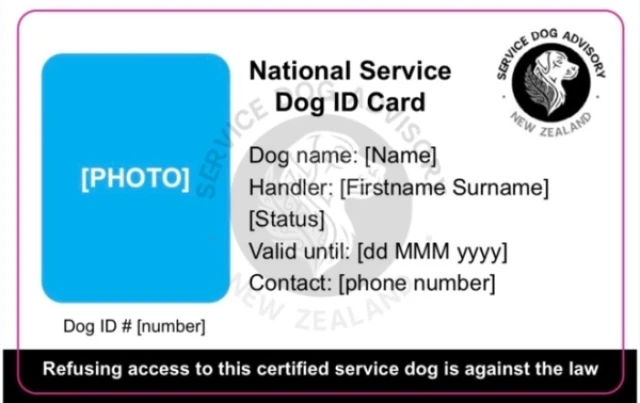
Front of the ID card
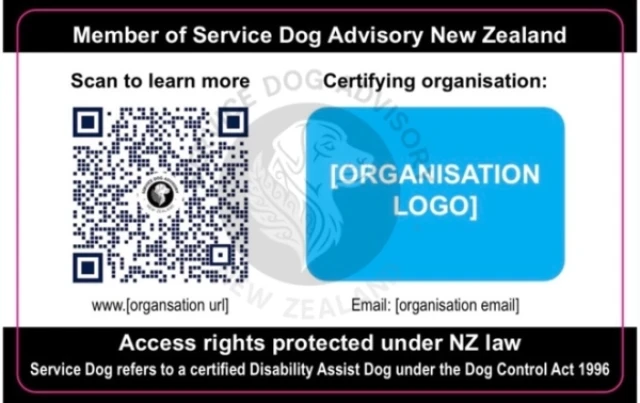
Back of the ID card
Note: K9 Search Medical Detection (K9SMD) used to certify disability assist dogs up until 20 December 2024. Dogs certified by K9SMD before that date have legal access rights bur are not eligible to receive the National Service Dog ID Card.
Learn more about the National Service Dog ID Card
Emotional support dogs and therapy dogs
It’s important to know that emotional support dogs and therapy dogs are different to disability assist dogs and don’t have the same public access rights.
Emotional support dogs are not certified by a disability support dog organisation and don’t have legal public access rights. These animals provide comfort and companionship and can help with people with conditions like anxiety or depression. However, they’re not professionally trained to perform specific tasks that assist with a person’s disability.
Therapy dogs are not certified and don’t have public access rights under law, but some organisations use them to comfort people on site. Therapy dogs are trained to provide affection and comfort to people in different settings, but they aren’t trained to assist with a person’s disability needs. You might see therapy dogs in places like hospitals, rest homes, or schools. Some workplaces also bring in therapy dogs for staff events and mental health days.
Some businesses welcome emotional support dogs, therapy dogs, and pet dogs, but they’re not legally required to.