Basketball for the disabled community
Explore accessible and inclusive basketball leagues.
On this page
Basketball is one of the most popular sports in the world. The rules are fairly simple, making it easy for new players to learn and enjoy. With its constant movement and quick scoring, basketball is not just fun to play, but fun to watch.
You don’t necessarily have to be good at shooting the ball to play a key part on your team. You can make an impact with your passing, dribbling, defending, and moving up and down the court.
Matt Vernick, Disability and Inclusion Lead for Basketball New Zealand, says basketball is a great game to connect with others in the disability community.
“It's a safe and welcoming space where you can meet new people, make friends, be physically active, and be challenged to improve your skills while enjoying yourself.”
Another great thing about basketball is it can be adapted to suit people with different disabilities, with wheelchair and deaf basketball being great examples.
Wheelchair basketball
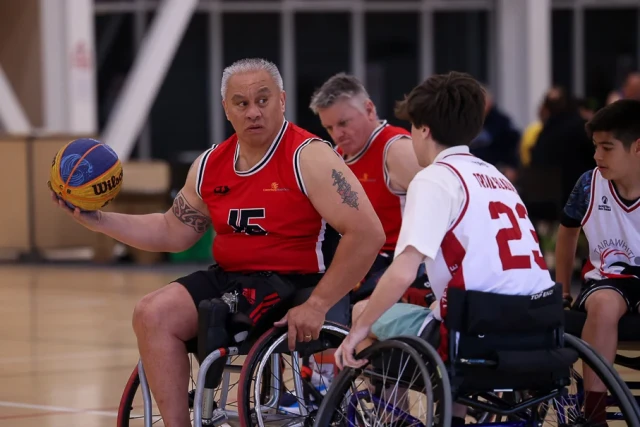
“If you understand standing basketball, it's very easy to understand wheelchair basketball,” says Matt.
Wheelchair basketball is played on a standard basketball court with regular 10-foot (3.04 meter) hoops but has some adaptations for wheelchair mobility.
A key feature is the two-push rule. The rule is that players can push their wheelchair twice before they must dribble, pass, or shoot the ball. There is no double-dribble rule like in standing basketball.
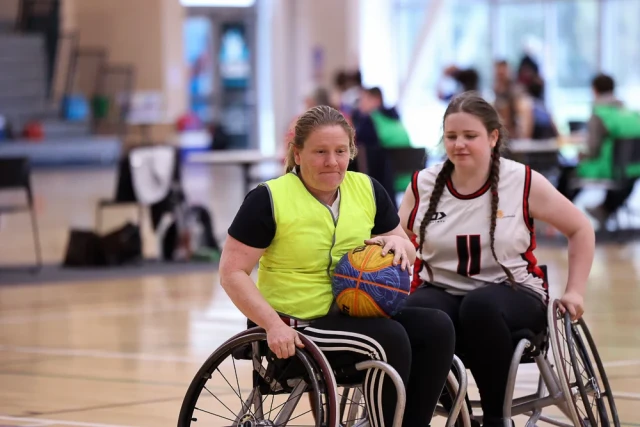
Everyone is welcome to play at Wheelchair Basketball New Zealand events (including national tournaments) and teams are mixed gender. This means that someone who regularly uses a wheelchair to get around can play alongside non-disabled family and friends. This is great if you’re a bit nervous about giving the sport a try and want some familiar faces around.
There are six or seven national tournaments each year. Many regional clubs have weekly training sessions to keep players’ skills sharp between tournaments.
International wheelchair basketball competition is open to people who have a ‘classifiable physical disability’ as outlined by the International Paralympics Committee.
Learn more about the classification system
Equipment
Players use wheelchairs designed specifically for basketball. These chairs have features to help you move swiftly and stay upright, such as angled side wheels and wheels at the back. If you try to play wheelchair basketball in a regular wheelchair, there’s a good chance you’ll tip over.
You don’t need to own a basketball wheelchair to get into the sport as most clubs have spares. If you stick with the sport, your club may loan you a chair long term.
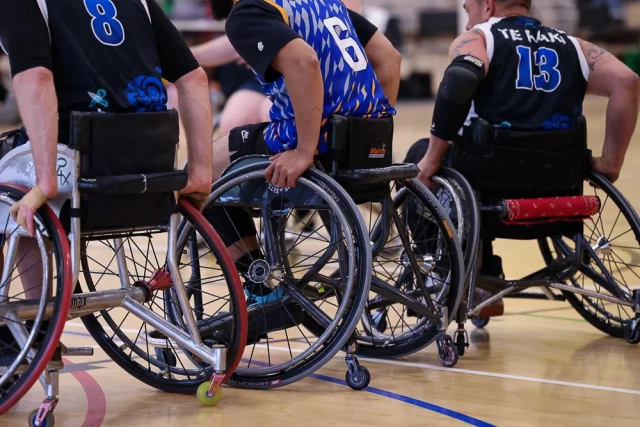
“One of the coolest things about the wheelchair basketball community is people are just so generous and they will often share their chairs with others. Not owning a chair isn’t a barrier to get into the sport,” says Matt.
If you eventually decide to buy a chair, you’re looking at around $4,000 for an entry level one and over $10,000 for a top-of-the-line model. You can apply for funding from sources like:
Halberg Activity Fund
Lottery Individuals with Disabilities Grants
Wilson Home Trust Equipment and Activity Grants.
Find funding sources on our grants and scholarships page
Find a wheelchair basketball club
Parafed Northland
Contact: Anna Hewitt anna@parafednorthland.co.nz
Auckland Wheelbreakers
Contact: Shay Stanford shaystanford88@gmail.com
Parafed Waikato
Contact: Cathy Wooller cathy@parafedwaikato.co.nz
Parafed Gisborne
Contact: Louise Ellery louise@parafedgisborne.co.nz
Parafed Bay of Plenty
Contact: John Sligo john@parafedbop.co.nz
Parafed Taranaki
Contact: Tracy Cocker at tracy@parafedtaranaki.co.nz
Sport Whanganui
Contact: Sarah Craig sarahc@sportwhanganui.co.nz
Parafed Manawatū
Contact: Guy Harrison guy@parafedmanawatu.com
Capital Basketball (Wellington)
Contact: Scott Richardson scott@capital.basketball
Nelson
Contact: Neisha Kindley neisha.kindley@gmail.com
Canterbury
Contact: Matt Vernick matt@nz.basketball
Timaru
Contact: Charlotte Chambers cchambers@primarysportscanterbury.org.nz
Parafed Otago
Contact: Paris Skipper sdo@parafedotago.co.nz
Deaf basketball
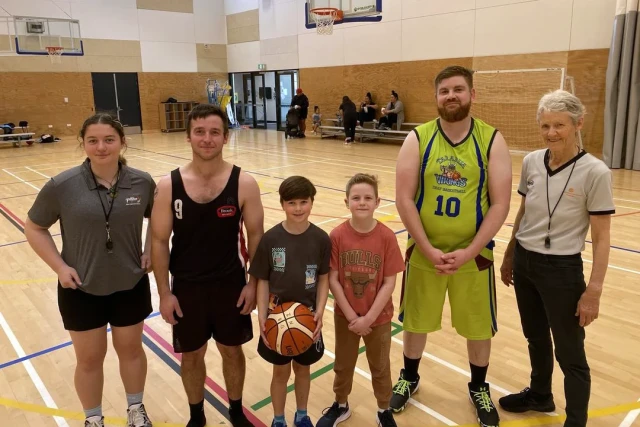
As the name implies, Deaf basketball is specifically for the Deaf community.
Deaf basketball follows all the standard basketball rules, but communication is done through sign language, gestures, and other visual cues.
Instead of blowing a whistle, the referees will use things like flags or LED lights to get the players’ attention and stop play.
Deaf basketball is played with the usual five players on a team on a full court, or with three players on a team on half a court (known as 3x3 basketball).
“3x3 basketball is very popular among the Deaf community because you obviously don’t need as many players. There are about 200 Deaf basketball players in New Zealand, so to get six Deaf people together to play isn’t as challenging, especially in the big population centres,” says Matt.
Deaf Sports New Zealand (DSNZ) oversees organised deaf basketball, including the annual national championship tournaments. DSNZ will put together teams for the national championships based on the regions where people live.
Get involved
If you want to start playing deaf basketball, get in touch with DSNZ. Email Chris Sinclair at president@deafsports.co.nz.
Learn more about Deaf Sports New Zealand
Upcoming Deaf basketball tournaments
2026 Deaf Sports New Zealand National Championship – November, Palmerston North
2027 Deaf Sports New Zealand National Championship – November, North Shore
Intellectual disability and other adaptive basketball groups
Special Olympics
Special Olympics New Zealand provides sports opportunities for athletes with intellectual disabilities or autism around the country. Basketball is one of the most popular Special Olympics sports in New Zealand
Find out more about Special Olympics
Find a Special Olympics club near you
Sonics basketball team - Taranaki
The Sonics are a team for people with intellectual disabilities. The team was born out of Special Olympics.
Contact: Ben Carlile-Smith benc@basketballtaranaki.co.nz
ADHD NZ basketball programme - Auckland
This group is for people with ADHD to get together to practice and play basketball. It is based on Auckland’s North Shore
Contact: Martin King martin_king@bnz.co.nz
Basketball for All – Hawke's Bay
Disability Sport & Recreation Hawke’s Bay runs sessions for people with disabilities, whether they’re beginners or experienced players, to develop their basketball skills.
Contact: admin@disabilitysporthb.co.nz
Youthtown - Christchurch
Youthtown is a not-for-profit organisation that runs a range of programmes for young people. Their Disabilities Basketball Community programme provides disabled people aged 11 to 24 an opportunity to learn and play the game of basketball.
Learn more about Disabilities Basketball Community
Contact: Holly Beynon holly.beynon@youthtown.org.nz
Unity basketball leagues
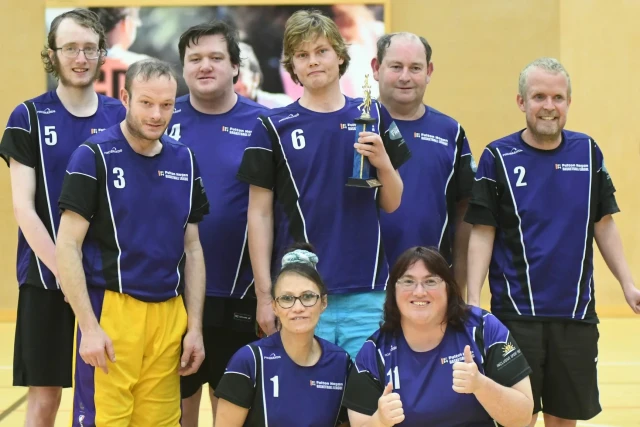
There are several social basketball leagues s around the country where disabled people and non-disabled play together – players of all abilities are welcome. These are known as unity or inclusion leagues,
These unity basketball leagues are great because disabled people can play alongside their family and friends.
With players having such a broad range of abilities, the rules are usually applied on player-by-player basis. For example, if you have trouble dribbling the ball, the referee isn’t going to penalise you for not dribbling.
Unity Basketball League – Gisborne
The Unity Basketball League is a collaboration between Sport Gisborne Tairāwhiti and Gisborne Basketball Association.
Contact: Keenan Ruru-Poharama keenanr@Whitiora.org
Unity Basketball League - Wellington
Games and trainings are run by Capital Basketball.
Contact: Scott Richardson scott@capital.basketball
Fulton Hogan Basketball League – Nelson
Inclusive Sport Trust has been running this popular league since 2006. It is affiliated with Nelson Basketball and Basketball New Zealand.
Learn more about the Fulton Hogan Basketball League
Contact: admin@inclusivesport.org.nz
Inclusion League – Christchurch
Canterbury Basketball runs the Inclusion League in Christchurch. Some of the teams include:
TĪMA NZ Charitable Trust – Contact Kaye Nordstrom at timakiwi@gmail.com
Pioneer Panthers – Contact Alice Clarkson at clubmanager@pioneer.nz.basketball
To find out more about the Inclusion League, contact Scott Kitto at scott@canterbury.basketball.